Most people don’t think about their teeth until something feels off a fracture line on a molar, a filling that’s worked loose for the third time, or a gap where a tooth used to be. These are exactly the situations where crowns and bridges come in, and they remain two of the most widely used restorative options in modern dentistry. But not all crowns and bridges are created equal, and the dentist you choose has a real impact on how the final result looks, fits, and holds up over time.
This guide walks through what crowns and bridges actually do, who typically needs them, what materials and technology go into a well-made restoration, and what to expect if you’re considering treatment with a cosmetic dentist in Vadodara.
What Exactly Are Dental Crowns and Bridges?
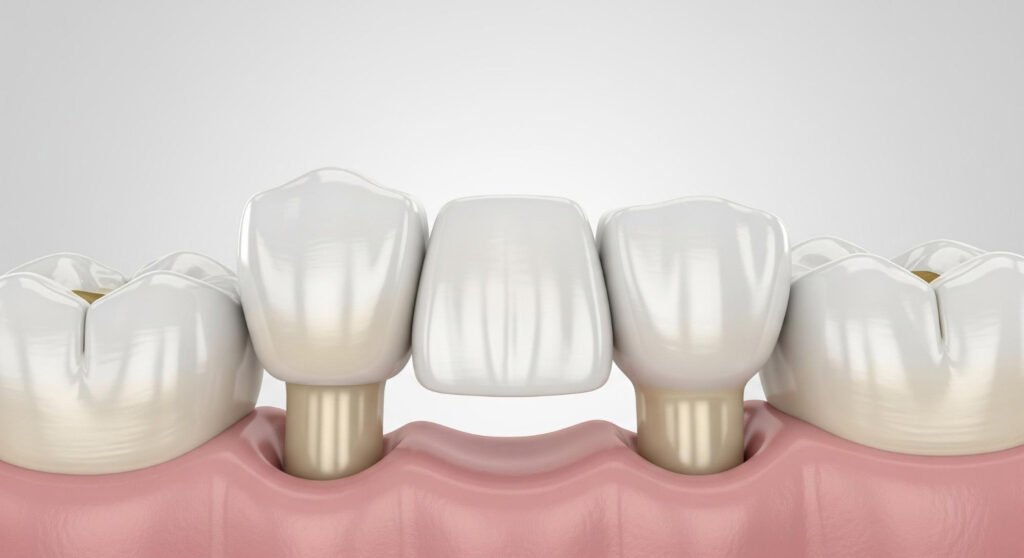
A dental crown is a cap that covers an entire tooth from the gum line up, restoring its shape, strength, and surface after damage, decay, or a root canal. A bridge, on the other hand, replaces one or more missing teeth by anchoring an artificial tooth (or several) to the natural teeth or implants on either side of the gap.
Both restorations serve two purposes at once: they bring back normal chewing function, and they restore the appearance of a healthy, complete smile. That dual purpose is exactly why crowns and bridges are often grouped under cosmetic and restorative dentistry; the line between “fixing” a tooth and “designing” a smile is thinner than most people realize.
Signs You Might Need a Crown or Bridge
There’s no single symptom that points to a crown or bridge, but a few common situations come up again and again in clinical practice:
- A tooth has a large filling that has cracked or come loose more than once
- A tooth has had root canal treatment and needs reinforcement to prevent fracture
- A visible crack or chip has weakened the tooth structure
- One or more teeth are missing, affecting your bite, speech, or appearance
- A tooth has worn down significantly due to grinding or age
- You want to improve the shape, size, or color of a tooth that doesn’t match the rest of your smile
If any of these sound familiar, a consultation with a dentist who specializes in restorative and cosmetic work is the logical next step not necessarily because you need treatment immediately, but because early evaluation almost always leads to simpler, less invasive options.
The Materials Behind a Good Restoration
Material choice plays a bigger role in the outcome than most patients expect. Here are the three options most commonly used today:
Zirconia Crowns : Known for their strength and versatility, zirconia crowns work well for both front and back teeth. They hold up under significant chewing force while still being shaped and shaded to blend with surrounding teeth.
All-Ceramic Crowns : These are typically the material of choice for front teeth, where translucency and a natural light-reflecting quality matter most. All-ceramic restorations are often the preferred option in smile design cases.
DMLS Metal-Based Crowns : Direct Metal Laser Sintering produces a metal framework with high precision, often used in cases involving multi-unit bridges or back teeth where additional structural strength is the priority.
A skilled dentist won’t default to one material across every case; the choice depends on which tooth is involved, your bite force, and your aesthetic priorities.
How Technology Has Changed Crown & Bridge Treatment
A decade ago, getting a crown often meant gooey impression trays, guesswork on shade matching, and multiple follow-up visits to fix poor-fitting restorations. That’s changed considerably with the technology now standard at well-equipped clinics.
Digital Imaging for Accurate Diagnosis Before any preparation work begins, imaging tools like RVG by Carestream and CBCT 3D Imaging allow dentists to see the full picture tooth structure, root condition, bone levels, and bite relationships well beyond what a standard X-ray can show. For quick imaging needs during follow-up visits, a Vatech Portable X-Ray unit adds flexibility without requiring patients to move between rooms.
Digital Impressions An Intraoral Scanner has largely replaced traditional impression putty. It captures a precise 3D digital model of the prepared tooth and surrounding structures, which is sent electronically to the dental lab. This reduces the margin of error in fabrication and often results in fewer adjustment visits.
Precision Tooth Preparation Shaping a tooth to receive a crown requires careful, controlled removal of structure not too much, not too little. Tools like the NSK Physiodispenser allow for steady, controlled preparation, which matters both for the fit of the final restoration and for protecting the healthy tooth structure underneath.
Comfort During Treatment Modern clinics also pay attention to the experience of sitting through a procedure, not just the clinical outcome. Ergonomic treatment chairs such as the Osstem K3 Chair are designed to support patients comfortably through longer appointments, while an Anesthetic Pen allows for a more controlled, steady delivery of local anesthesia compared to traditional syringes.
Soft Tissue Precision In cases where the gum line needs reshaping to achieve the right contour around a new crown a common step in smile design work Laser Dentistry such as the Biolase Epic X allows for precise, minimally invasive soft-tissue adjustment.
Sterilization Standards None of this matters without strict infection control. A Class B Autoclave, considered the gold standard in dental sterilization, ensures that every instrument used during your treatment meets a rigorous cleanliness standard before each procedure.
What the Treatment Process Typically Looks Like
While every case is different, most crown and bridge treatments follow a similar sequence:
- Assessment – Digital X-rays, CBCT imaging if needed, and an intraoral scan help the dentist evaluate the tooth, bite, and surrounding structures. Any necessary preparatory treatment, such as root canal therapy or gum care, is completed first.
- Tooth Preparation – Under local anesthesia, the tooth is shaped to receive the crown, and a digital impression is captured. Shade selection happens here too, so the final restoration matches your natural teeth.
- Provisional Restoration – A temporary crown or bridge is placed to protect the prepared tooth and maintain function and appearance while the final piece is fabricated at the lab.
- Final Placement – Once the custom-made crown or bridge arrives, it’s checked carefully for fit, bite alignment, and appearance before being placed.
The full process usually spans a couple of visits over one to a few weeks, depending on lab turnaround and whether any preparatory treatment was needed.
Choosing the Right Dentist for Crowns & Bridges in Vadodara
Not every dental clinic approaches crown and bridge work with the same level of detail. When evaluating your options as a patient, a few things are worth asking about:
- Does the clinic use digital imaging (CBCT, RVG) for diagnosis, or rely solely on basic X-rays?
- Are digital intraoral scans used, or are traditional impressions still standard?
- What materials does the clinic typically recommend, and why?
- Is there a clear, itemized cost estimate before treatment begins?
- What sterilization protocols are followed?
Patients searching for the best dentist in Bhayli or a dental clinic in Vadodara for crown and bridge work will generally find that clinics investing in updated diagnostic and fabrication technology tend to deliver more predictable, better-fitting results with fewer follow-up adjustments.
Smile Design: Where Function Meets Aesthetics
It’s worth highlighting that crowns and bridges aren’t purely mechanical fixes; they’re often central to smile design work, particularly when front teeth are involved. A well-planned crown considers your facial proportions, the natural curve of your smile line, and how light reflects off your existing teeth. This is why many patients in areas like Vasna Bhayli specifically seek out a cosmetic dentist rather than treating a crown as a routine, one-size-fits-all procedure.
Caring for Your Crown or Bridge Long-Term
Once your restoration is placed, the habits that protect your natural teeth apply here too:
- Brush twice daily and floss regularly for bridges, a floss threader or interdental brush helps clean under the connecting section
- Avoid biting down on very hard foods like ice or hard candy, which can chip even strong materials
- Keep up with routine dental checkups so your dentist can monitor the fit and condition of the restoration over time
- Consider GBT (Guided Biofilm Therapy) sessions periodically a gentle, technology-assisted cleaning approach that helps maintain the gum tissue around crowns and bridges
Final Thoughts
Crowns and bridges remain some of the most reliable solutions for damaged, weakened, or missing teeth but the experience and outcome depend heavily on the technology, materials, and expertise behind the treatment. Whether you’re dealing with a cracked tooth, an old filling that keeps failing, or a gap that’s affecting your confidence, working with an experienced cosmetic dentist who combines digital diagnostics, precise fabrication, and a comfort-focused approach will make a noticeable difference in how your finished smile looks and feels.
If you’re exploring crown or bridge treatment in Vadodara, take the time to ask about the technology and process behind the recommendation; it’s one of the clearest indicators of the quality of care you can expect.